
ISO 55000 gets invoked a lot in conversations about asset management programs — sometimes as a genuine framework for improving maintenance practices, sometimes as a compliance checkbox that generates documentation without changing how maintenance actually works. The distinction matters, and it's worth understanding what the standard actually requires before deciding how to align your PdM program with it.
This article focuses on the three ISO 55000 clauses most directly relevant to condition-based maintenance: asset lifecycle planning (Clause 6.2), performance evaluation (Clause 9.1), and continual improvement (Clause 10). We'll explain what each clause expects and where a well-configured PdM system satisfies those expectations without requiring a separate documentation layer.
What ISO 55000 Actually Specifies (and What It Doesn't)
ISO 55000 is a principles standard, not a prescriptive specification. It tells you what to achieve — value realization from physical assets, risk-informed maintenance decisions, evidence-based lifecycle management — but it does not tell you how. Unlike ISO 9001, which has specific procedural requirements, ISO 55000 gives organizations significant latitude in how they demonstrate conformance.
This is good news for maintenance teams: you don't need to create new procedures and documents to satisfy ISO 55000 if your existing data systems and maintenance practices already capture the required evidence. The standard asks for objective evidence that assets are being managed according to a documented plan, that performance is being monitored against defined targets, and that the organization is responding to deviations. A CMMS with reliable work order history and a functioning KPI review process provides most of that evidence already.
Where most facilities fall short isn't documentation — it's the quality of their condition data and the connection between that data and maintenance decision-making. ISO 55000 Clause 6.2.2 specifically requires that asset management plans consider the condition of physical assets and the expected performance over their service life. Fixed-interval PM schedules without condition data meet the letter of this requirement weakly at best; condition-based maintenance programs with documented sensor history and TTF forecasting satisfy it directly.
Clause 6.2: Asset Management Planning and Lifecycle Decisions
Clause 6.2 is the heart of ISO 55000's asset management framework. It requires organizations to establish plans that address how assets will be acquired, operated, maintained, and disposed of in ways that realize the organization's objectives at acceptable risk levels.
For a maintenance team, this translates to three practical requirements:
- Asset criticality ranking: Which assets are most important to organizational objectives (production output, product quality, safety), and how does that ranking inform maintenance resource allocation? ISO 55000 doesn't require a formal FMEA, but it does require that maintenance plans be risk-informed, not just interval-based.
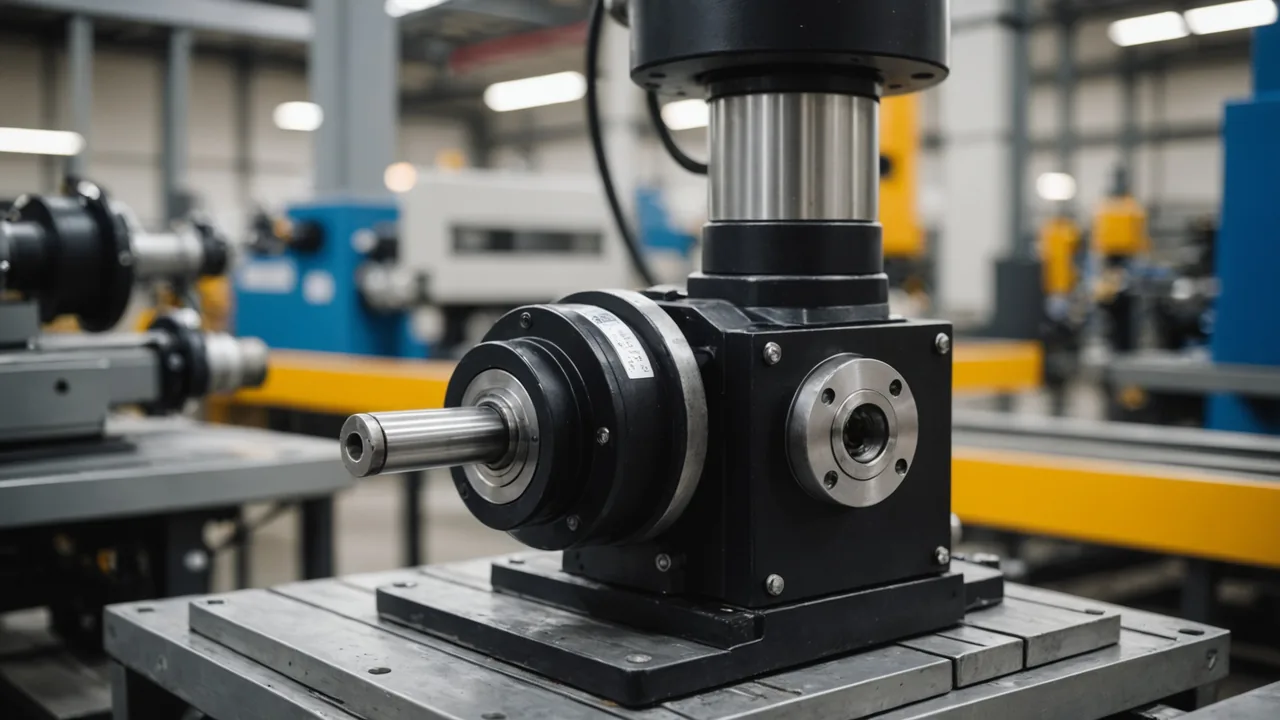
- Condition and performance data: Plans should be updated as asset condition changes. A gearbox that is showing wear progression should trigger a plan update — either a scheduled repair in the next maintenance window, a reduced operating load, or an accelerated PM interval. This is exactly what a TTF-based PdM system provides: an automated mechanism for updating the maintenance plan based on current asset condition.
- Lifecycle cost visibility: ISO 55000 asks organizations to consider lifecycle costs, not just current-period maintenance spend. This means tracking avoided failure costs, PM interval adjustments based on condition data, and the financial impact of maintenance decisions over time. The ROI tracking module in a mature PdM deployment provides this data; without it, lifecycle cost analysis remains a spreadsheet exercise.
In practice, we see facilities satisfy Clause 6.2 most naturally when their CMMS work order data and PdM alert history are integrated — the condition data and the maintenance response live in the same system, creating a traceable record from anomaly detection through corrective action through outcome.
Clause 9.1: Performance Monitoring and Measurement
ISO 55000 Clause 9.1 requires that organizations monitor, measure, analyze, and evaluate asset management performance against defined objectives. This is the KPI clause, and it's the one most directly impacted by whether your maintenance program has reliable data infrastructure.
The standard requires that you determine what to measure, when to measure it, and who analyzes the results and makes decisions. For a reliability team, this maps to: a defined set of maintenance KPIs (MTBF, MTTR, PM compliance, CM:PM ratio — covered in the companion article on maintenance KPIs), a regular review cadence (weekly or monthly), and a decision process for responding to KPI deviations.
The most common ISO 55000 gap we identify during initial site assessments isn't missing documentation — it's CMMS data quality. If technicians aren't closing work orders with accurate start and finish times and failure mode codes, the MTBF and MTTR calculations are unreliable, and Clause 9.1 conformance is essentially fictional regardless of what the reports say.
PdM systems contribute to Clause 9.1 conformance by adding the condition monitoring dimension to performance measurement: mean time to detect (MTTD), anomaly resolution rate, and TTF accuracy over time. These metrics tell you whether your early warning capability is improving — a dimension that CMMS-only programs can't capture.
Clause 10: Continual Improvement and Nonconformance Response
Clause 10 requires that organizations respond to nonconformances (unexpected failures, near misses, performance deviations) with root cause analysis and corrective actions, and that they maintain a systematic process for improving asset management practices over time.
For maintenance teams, this means: when an asset fails unexpectedly, the response shouldn't be just "fix the machine and close the work order." It should include an investigation of why the failure wasn't predicted or prevented, what the root cause was, and whether the maintenance plan needs adjustment. In ISO 55000 terms, this is a nonconformance response process.
A PdM system contributes to Clause 10 conformance by providing the data needed for post-failure analysis: what was the asset's anomaly score history in the 7 days before failure? Did an alert fire and get dismissed? Was there a sensor gap? This retrospective data is what allows a genuine root cause analysis rather than a narrative reconstruction from memory.
For organizations working toward ISO 55001 certification (the requirements standard in the ISO 55000 family, distinct from ISO 55000 which is the overview/guidance document), an auditor will typically ask for evidence of: a documented asset criticality process, KPI tracking with defined targets, and at least two examples of Clause 10 nonconformance responses. A well-maintained PdM deployment provides documentary evidence for all three without requiring separate compliance-specific processes.
A Practical Alignment Checklist
If your organization is working toward ISO 55000 alignment or a formal ISO 55001 audit, here are the practical steps that a PdM program enables:
- Document your asset criticality ranking — which assets are tier 1 (line-critical) versus tier 2 (important but bypassable) versus tier 3 (non-critical). This is the foundation of a risk-informed maintenance plan.
- Configure your PdM system to log anomaly events with timestamps and asset IDs, and ensure these logs are accessible during an audit. Continuous sensor data history is objective evidence of condition monitoring activity.
- Run a monthly KPI review against at least MTBF, PM compliance, and CM:PM ratio. Document the review and any resulting maintenance plan adjustments. Two years of consistent KPI records is strong audit evidence for Clause 9.1.
- Document at least two post-failure root cause analyses per year where you used condition monitoring data as part of the investigation. This directly addresses Clause 10 continual improvement requirements.
- Maintain a log of averted failures — events where a PdM alert led to a planned repair that prevented an unplanned failure. This is your lifecycle cost evidence for Clause 6.2.
ISO 55000 compliance shouldn't require a maintenance team to operate differently than a well-run reliability program already does. The standard is asking for what good maintenance practice already looks like — the documentation just needs to exist and be accessible. A PdM program with proper CMMS integration creates most of that documentation as a byproduct of doing the work.