
I spent eight years as a reliability engineer at a Tier-1 stamping supplier before starting Gearcadence, and the conversations I have with maintenance teams at similar facilities today are remarkably consistent. The pain points are the same: stamping press drive failures that shut down JIT delivery commitments, CNC spindle bearing replacements that only happen after a crash, transfer line gearboxes that get swapped on a fixed-interval schedule whether they need it or not. The problem isn't lack of awareness — it's lack of a practical path from "we know this machine is important" to "we have a reliable early warning system on it."
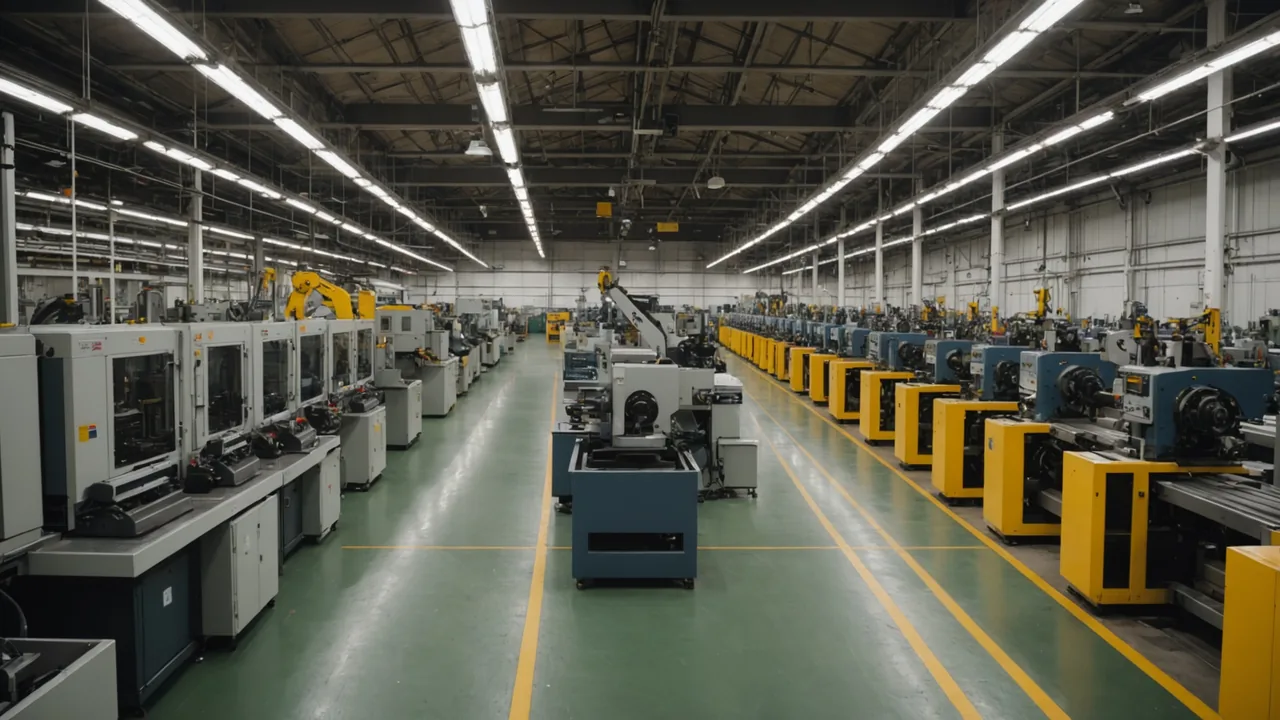
This playbook is written specifically for reliability teams at mid-size Tier-1 automotive suppliers — facilities with 80 to 400 stamping and machining assets, typically $100M to $400M in annual plant revenue, running automotive OEM delivery schedules that leave very little tolerance for unplanned downtime. If that's your context, read on.
The Tier-1 Downtime Problem Is Different From General Manufacturing
The cost calculus for downtime at a Tier-1 supplier is more severe than in most other discrete manufacturing environments. You're not just losing your own throughput — you're at risk of triggering an OEM line stop, which brings contractual penalties and the very real prospect of losing a production program to a competitor at the next resourcing event.
The industry benchmark for unplanned downtime cost in discrete manufacturing sits at $20,000–$80,000 per hour. At a Tier-1 facility supplying body stamped panels or chassis components directly to an OEM assembly plant, the actual number is often at the upper end of that range when you fold in the OEM penalty exposure, expedited freight for alternative parts routing, and the maintenance overtime required to recover production. We've spoken with plant managers who describe single shift-loss events that totaled over $200,000 when all costs were counted.
The implication: the ROI threshold for a PdM program at a Tier-1 supplier is lower than for most other manufacturers. You don't need to prevent many failures per year to justify the investment. You need to prevent the right failures — the ones on line-critical assets during scheduled production.
Asset Prioritization: Where to Start When You Can't Instrument Everything
A common mistake we see in PdM deployments is treating all assets equally — installing sensors on everything available and then trying to make sense of the resulting data volume. For a Tier-1 facility, the right starting point is a structured asset criticality ranking against two dimensions: production impact and failure probability.
A practical prioritization exercise for a stamping facility:
- Line-critical drives and gearboxes — assets whose failure stops the line with no bypass path. These are your highest priority regardless of MTBF history. Typically: transfer line indexing drives, press flywheel bearings, and feed line motor-gearbox assemblies.
- High replacement cost + long lead time assets — assets where an unplanned replacement requires a 6–12 week OEM lead time or $50,000+ in parts. Identifying these by asset class and having sensor coverage before they fail is the fastest way to avoid schedule-breaking emergency sourcing situations.
- Repeat failure assets — machines with two or more unplanned failures in the past 24 months in your CMMS. These are your canaries. Repeat failures on the same asset are almost always a diagnostic problem, not a maintenance execution problem.
- High PM cost but low failure impact — assets where you're spending significant labor on time-based PMs that your failure history doesn't justify. These are candidates for interval extension, not immediate sensor deployment.
For a typical 150-asset stamping facility, this exercise usually surfaces 30–45 assets in tiers 1 and 2 that warrant condition monitoring immediately, and another 40–60 in tier 3 that should be added in a second phase.
Asset-Specific Failure Modes: What to Monitor and Why
Stamping facilities have three dominant asset classes that each require different monitoring approaches.
Stamping Press Drives and Flywheel Assemblies
Mechanical stamping presses are high-energy, cyclically loaded machines. The dominant failure modes are crankshaft bearing wear (manifests as subharmonic content at shaft rotation frequency), clutch/brake degradation (changes in cycle time and torque transients), and eccentric flywheel bearing fatigue. Vibration monitoring at the main bearing housings captures the first and third. Motor current signature analysis (MCSA) can detect clutch/brake wear without any mechanical intrusion. For presses running on two-shift automotive schedules, MCSA is often the least invasive and most actionable monitoring approach.
CNC Machining Centers and Transfer Line Spindles
CNC spindle bearings are the single highest-cost wear item in many Tier-1 machining facilities. Spindles running at 6,000–18,000 RPM develop bearing defect frequencies in the 500–3,000 Hz range — well above what standard vibration monitors reliably capture. You need triaxial accelerometers with flat frequency response to at least 5,000 Hz, and you need the inference model to be trained on the specific spindle and RPM range, not a generic bearing defect model. A model calibrated on a 1,450 RPM motor will produce poor results on a 12,000 RPM spindle.
In our deployments on CNC machining centers, we use a 2-week learning window at normal production speeds before enabling alerts. This catches the common problem of false positives during tooling changeovers, where vibration transiently spikes in patterns that look like bearing defects to an untrained model.
Transfer Line Gearboxes and Indexing Drives
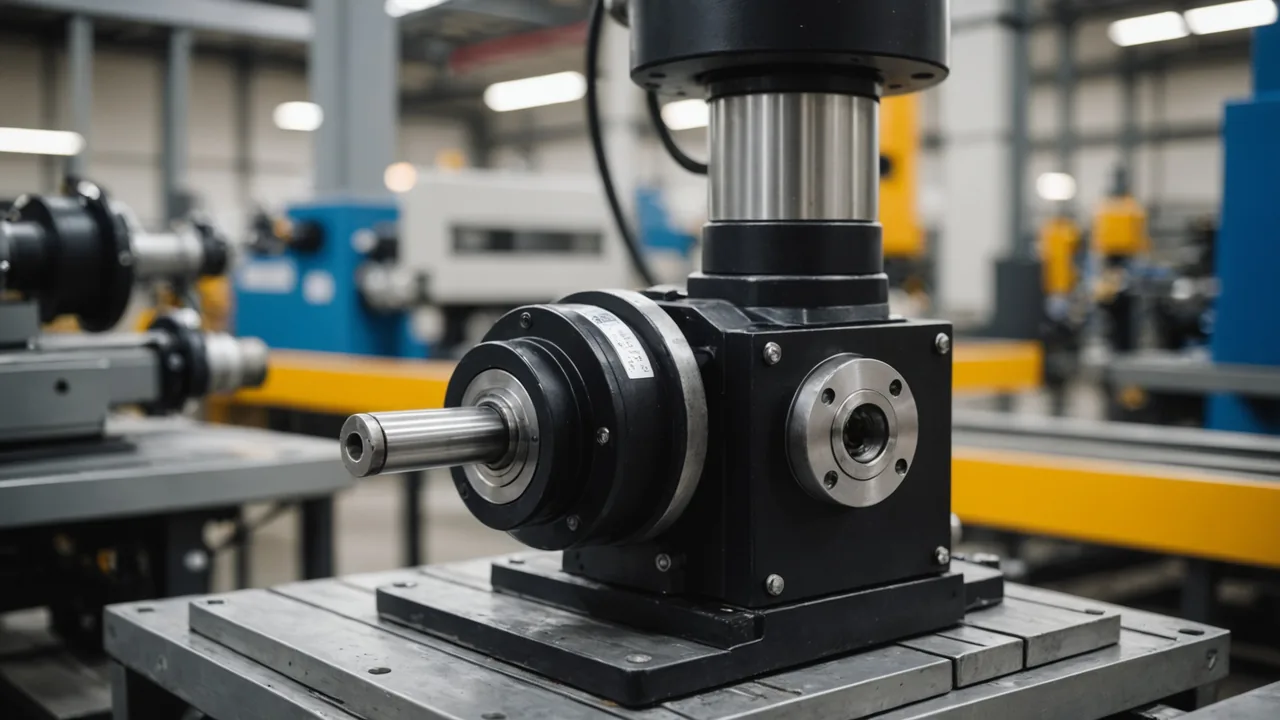
These are usually the highest-consequence assets in a Tier-1 stamping facility — failure stops the entire line, not just one station. Helical gearboxes on indexing drives show failure progression primarily through gearmesh frequency sidebands (indicating tooth wear) and bearing outer race defect frequencies (BPFO). Both are detectable with standard triaxial vibration monitoring at the gearbox housing, provided the sampling rate is high enough to capture the relevant frequency range.
The key operational consideration: transfer line gearboxes are often running when the plant has minimal maintenance staff on site (night shift, weekends). An edge inference architecture that can fire alerts locally and push to a mobile notification even when the plant IT network is in a maintenance window is meaningful for this asset class — not a theoretical benefit.
Integration with Automotive-Specific CMMS Workflows
Most Tier-1 suppliers run SAP PM or IBM Maximo as their CMMS backbone. A few use Fiix or similar mid-market alternatives. The critical integration requirement for a PdM program in an automotive context is bidirectional: alerts from the PdM system need to create work orders in the CMMS automatically (not require a technician to log into a separate portal), and completed work order actuals need to flow back to the PdM system to close the feedback loop and improve TTF model accuracy.
The unidirectional integration — PdM alerts feeding into CMMS work orders — is table stakes. Most platforms support it. The bidirectional feedback loop is where most deployments fall short, and it's the mechanism that makes TTF accuracy improve over time as the system accumulates site-specific actuals data. If your PdM system doesn't have access to what technicians actually found when they opened the machine, the model is flying partially blind.
Getting Maintenance Planning Aligned With Production Scheduling
The most underestimated challenge in a Tier-1 PdM deployment isn't technical — it's organizational. Maintenance teams that have operated in a reactive-PM model for years need to trust the TTF estimates enough to act on them proactively, which means coordinating repair windows with production scheduling before the machine trips.
In our experience, the fastest way to build that trust is to make the first few interventions visible and well-documented. When a gearbox is opened based on a Gearcadence alert and the technician finds actual wear that matches the predicted failure mode, that story circulates through the maintenance team within 48 hours. It changes the culture faster than any training session.
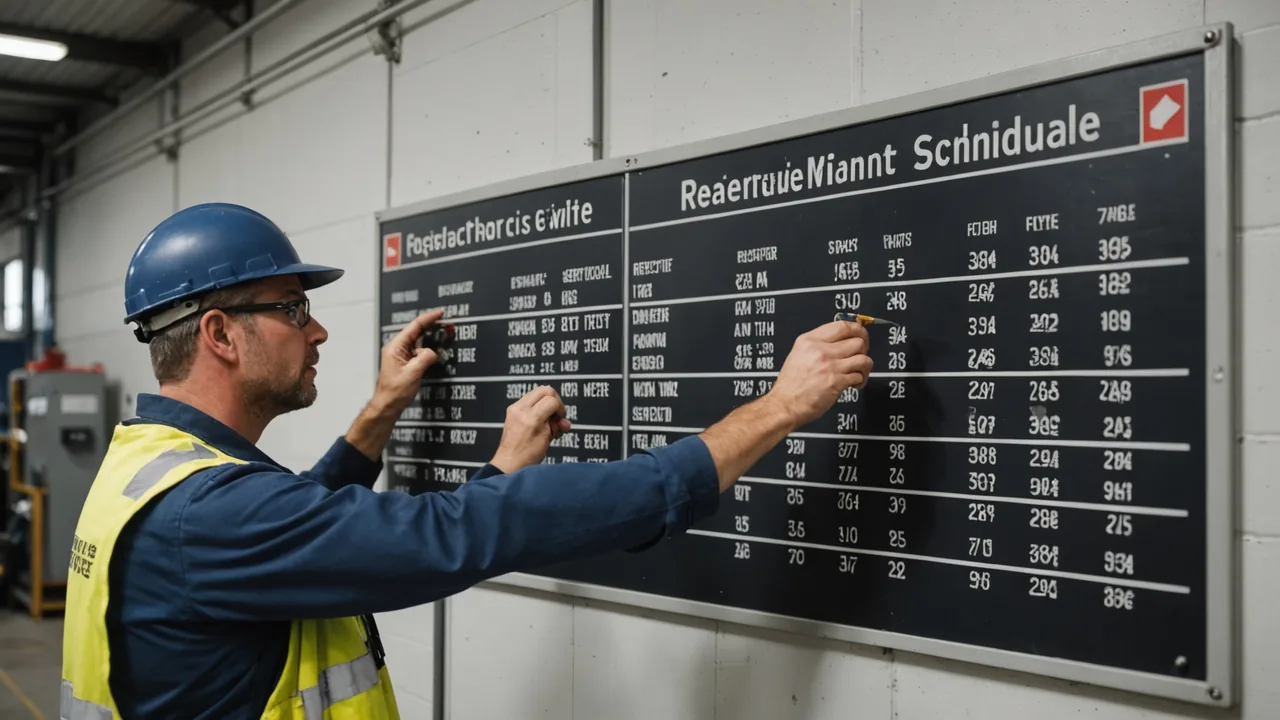
The planning cadence that works at most Tier-1 facilities: a weekly review of the fleet dashboard at the Monday maintenance planning meeting, where any assets in amber or red status are assessed for repair timing against the production schedule. This doesn't require a data science team — it requires a planner with 20 minutes and access to the dashboard. That's the operating model we design for.
What a Realistic First-Year Outcome Looks Like
For a Tier-1 facility deploying on 40–60 line-critical assets, a realistic first-year outcome includes: 2–5 averted failures on monitored assets, a measurable reduction in emergency parts procurement (the 40% reactive parts premium is real and documented), and a MTBF improvement on monitored assets of 15–25% as interval extensions become defensible based on actual condition data rather than OEM schedule alone.
Those aren't dramatic numbers. But at a facility where one unplanned press failure can cost $40,000–$80,000 in downtime and emergency repair costs, avoiding two or three such events in year one pays for a multi-year PdM program several times over. The ROI math at Tier-1 facilities is not complicated — it's just a matter of getting started on the right assets with a system that your maintenance team will actually use.